Author: Mathias Duda

  • Unlock Site Search Potential for Brand Searches & Retail Media Ads

    Unlock Site Search Potential for Brand Searches & Retail Media Ads

    In the world of online shopping, customers often start their search with a product’s brand name. For ecommerce retailers, it is essential to lead this “brand search” traffic to a dedicated landing page that highlights the associated products and provides a seamless user experience.

    Site search is an essential aspect of ecommerce, especially on mobile devices, where customers may prefer to search for products rather than browsing through multiple pages. But retailers, and their ecommerce directors, are strapped for time and resources. It’s no wonder that Baymard Institute, found 70% of ecommerce sites fail to provide a satisfactory search experience. So if you’re looking for just one thing to change about your site search, how about optimizing brand searches? Imagine the customer experience improvement and increased likelihood of conversions simply by optimizing brand searches within your site search. Baymard goes on to discuss the importance of testing and measuring the effectiveness of site search to continuously improve it. We may all have heard it a thousand times over, after all, site search optimization is not a new topic. And, even still, shops are failing at this elusive task. Thankfully, Baymard continues to beat the drum, driving us all to a more focussed and mature understanding of what brings the greatest gains in online retail optimization.

    It’s safe to say that the road to measurable customer journey optimization and employee resource allocation is achieved by clearly understanding both how customers use your webshop, and secondly, how to improve their journey, today.

    Site Search – Understand How Customers Interact with Your Shop

    How do you efficiently get a better picture of site search resources (tech and employee time spent) to make better decisions regarding which optimizations need to be prioritized and identify any missing functionality

    Site Search Performance Measurement

    Number one: Can you accurately measure your site search performance?
    Onsite search is notoriously broken. Retailers continuously optimize site search issues that don’t bring the expected return. This is largely due to the proliferation of Google Analytics. A cheap tracking and analytics solution that comes at the cost of accurate insight. This is no fault of its own. GA does not purport to be the ideal solution for onsite search tracking and analytics. But that doesn’t keep retailers from treating it that way.

    Imagine a way to track onsite search customer journeys without sessions being lost or unable to rationalize search revenues as a result of filters being set, customers using the browser “back” button, or an onsite campaign being triggered. This type of solid, no-nonsense site search tracking technology is the backbone behind searchHub’s search optimization success. This search tracking solution is one-of-a-kind and allows us to track customer search journeys throughout sessions and no matter the underlying site search technology being used.

    Site Search – Improve the Customer Journey!

    Number two: can you pinpoint what needs to be optimized in your customer’s site search journey and improve it now?

    Ecommerce retailers are prepared to optimize anything they can measure. This makes it easy to articulate a business case. But cleanly tracking search, throughout the customer journey, has always been an issue. This increases the challenge of creating a seamless and efficient search experience for customers.

    So, now imagine you have a system in place that makes it easy to identify which site search optimizations will provide the greatest uplift in customer satisfaction, based upon how they interact with your webshop. A solution that tells you what to optimize next, no matter the underlying site search technology you use, and provides the tools you need to make the necessary changes now!

    That’s searchHub.

    Thinking Outside the Search Box

    So, let’s assume you’re using searchHub. What types of KPIs would you begin optimizing straight out of the gate? You might be surprised: there are a few aspects of the customer journey which are directly influenced by site search, but not often associated with it.

    The following is a short list of where to begin creating a better customer journey by leveraging searchHub to optimize your existing site search.

    1. Optimize your site search for brand terms

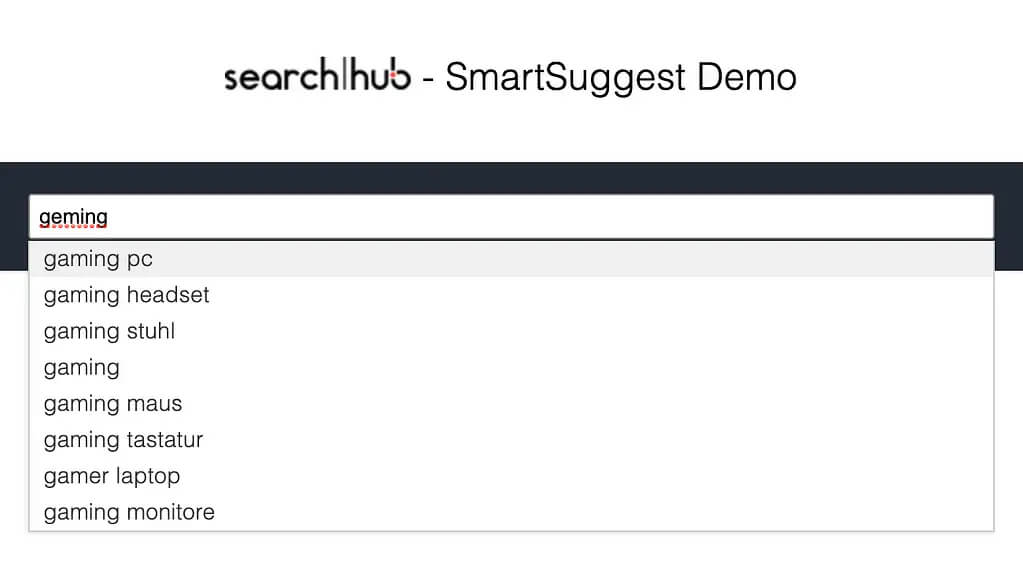
    To ensure that your brand search traffic leads to specifically curated landing pages, you first need to ensure that your site search can handle different variations (e.g. adidas, adadis, addidas, addias, adiddas etc.) of brand names, including misspellings, abbreviations, and different word orders. Additionally, consider adding predictive search suggestions and autocomplete functionality to make it easier for customers to find the brands they’re looking for.

    2. Create dedicated landing pages for brand searches

    This second point builds on the previous one. Your search can handle any misspelling or variation of the brands in your catalog? Now, the hard work of ensuring a seamless user experience, by creating a dedicated landing page for brand searches, ensues. Landing pages showcase a brand’s products and provide customers with an easy-to-use filtering system that allows them to narrow down their search results. Make sure to include relevant information such as product reviews, ratings, and pricing to help customers make informed purchase decisions.
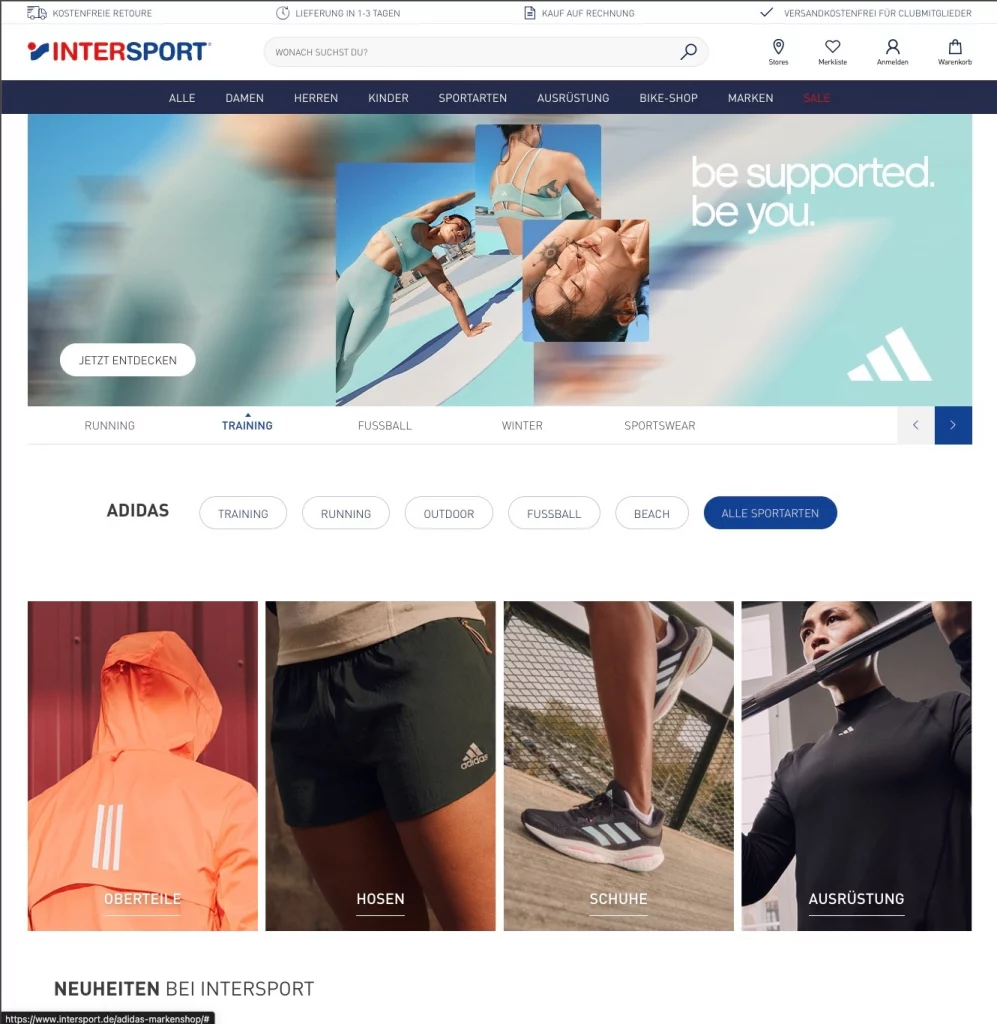
    Intersport Adidas Brand Landing Page
    Intersport Adidas Brand Landing Page

    3. Optimize Suggest for Brand Searches

    The autocomplete functionality your search engine provides, is often the first interaction customers have with the brands in your shop. Making these visible as early as possible in the customer journey increases the overall shop usability. Retailers can use smartSuggest to train the search algorithm to prioritize brand-related search terms and suggest relevant products. This can be achieved by tagging and categorizing products by brand, and using this information to inform the smartSuggest algorithm. Additionally, retailers can monitor the performance of the smartSuggest feature, using searchInsights, and over time and make adjustments to optimize its performance.
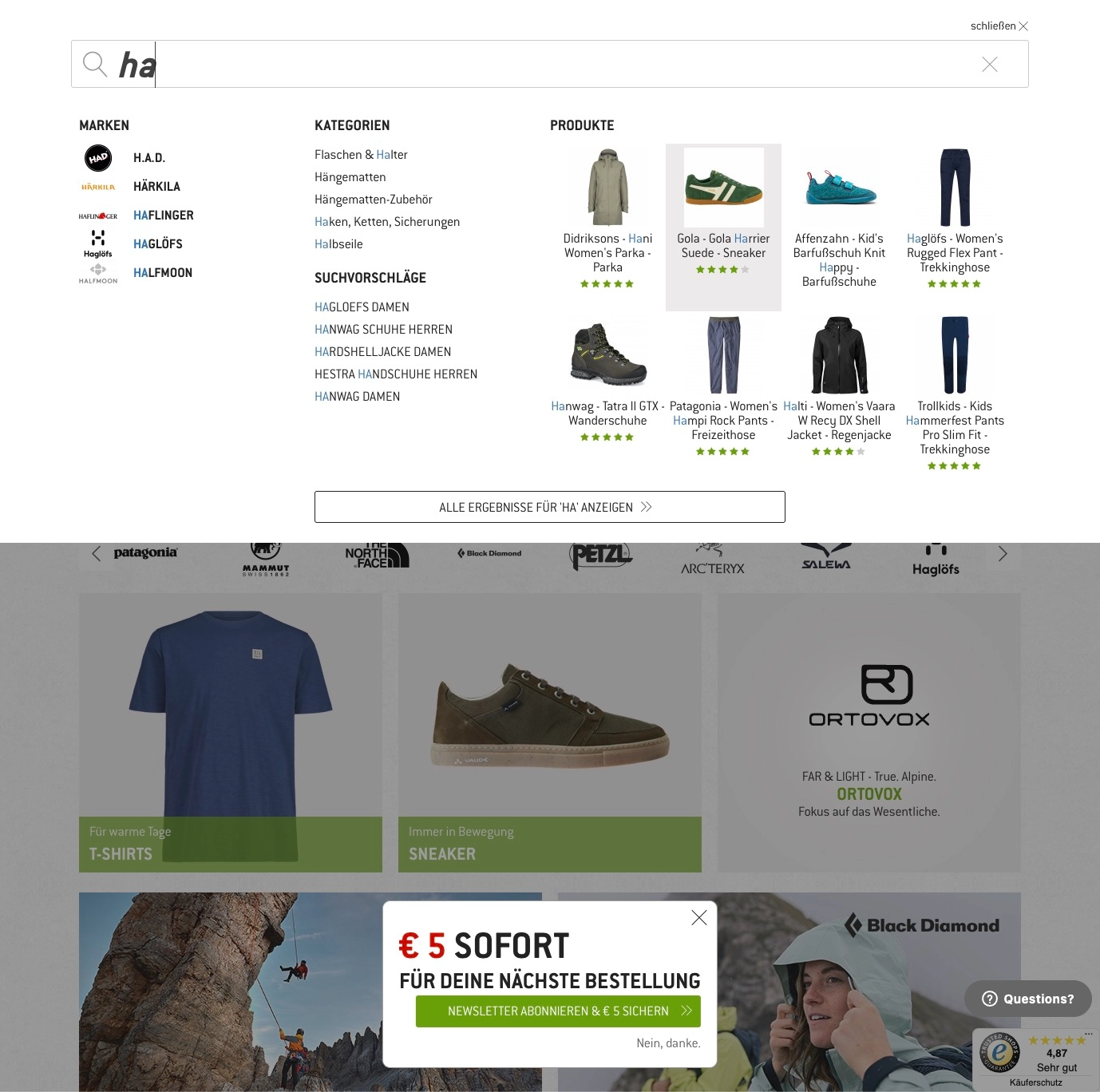
    Bergfreunde - Brand placement in smartSuggest.
    Bergfreunde – Brand placement in smartSuggest.

    4. Use retail media ads in site search

    Retail media is a form of advertising that allows brands to promote their products on the websites of retailers or marketplaces. By using retail media ads in site search, brands can increase their visibility and drive more conversions. Target the right audience, use relevant keywords, and track the performance of retail media ads to optimize them over time.
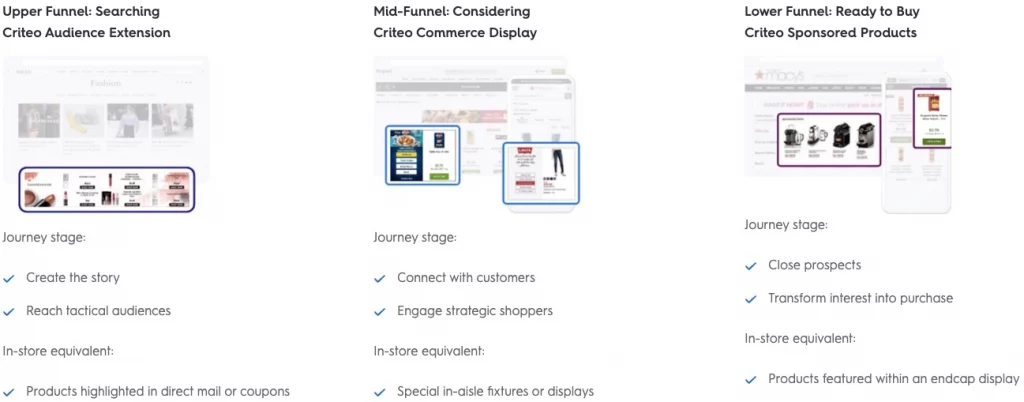

    Criteo - correct Retail Media placement in a webshop.
    Criteo – correct Retail Media placement in a webshop.

    5. Use data to personalize the user experience

    searchHub’s searchCollector provides a host of search behavior data, giving granular insight into how customers interact with search throughout their journey. What has been placed into, and then removed from, the basket? Which products have been seen but not clicked? Which products bring the most revenue, compared to those with the greatest profit? This anonymous information, tracked no matter the underlying site search technology, provides the ability to personalize search results and suggest relevant products that match customer interests. Not only will this improve the user experience, but also increase the likelihood of conversions.

    Conclusion

    Unlocking site search potential requires a strategic approach that focuses on customer needs and behavior. Begin by optimizing site search for brand terms, create a dedicated landing page, optimize smartSuggest, use retail media ads in site search, and personalize the user experience using data. By implementing these strategies, ecommerce sites can create a personalized brand experience for their customers, showcase their products effectively, and ultimately drive revenue.


  • Transforming ECommerce Site Search: The Power of searchHub’s AI-Driven Approach

    Transforming ECommerce Site Search: The Power of searchHub’s AI-Driven Approach

    Site Search Transformation through Efficiency, flexibility, and transparency!

    Have you ever been overwhelmed by the amount of effort it takes to optimize your ecommerce site search? What if your business could improve its site search with an AI built to optimize it, not replace what you already have? Imagine a tool that can enhance the user experience by providing an efficient and user-friendly search. This is where searchHub.io comes in.

    Neon Sign The Place

    Efficient

    With searchHub’s AI-driven approach, businesses can improve their site search regardless of their existing solution. searchHub’s AI-powered algorithms translate user phrases into the best possible search query, leading to higher conversion rates and a better user experience. Additionally, the tool provides an in-depth representation of all search activities, helping businesses efficiently improve their search experience.

    Flexible

    Flexibility is another critical aspect of searchHub.io. It can be integrated with any site search solution, saving time and resources while allowing businesses to customize their search experience according to their specific needs.

    Transparent Bubble

    Transparent

    Transparency is also a key feature of searchHub. The tool provides businesses with a unique view of their search data, allowing them to identify trends and understand customer behavior. Businesses that understand their customers’ needs and preferences are more likely to succeed in today’s competitive e-commerce market.

    Furthermore, searchHub is the only add-on-solution on the market that can be appended to your current site search in a short amount of time, making it an excellent choice for large-scale e-commerce sites. Speed and agility are critical for large-scale e-commerce sites to stay competitive.

    “Our site search is built on Elasticsearch. B2B is known for its challenges, for which there are no standard vendor solutions. searchHub delivers the desired added value to our setup using transparently delivered data.”

    Michael Kriz

    Automated

    This type of automation is key for a modern site search strategy, and here’s why: Imagine the volume of search data generated by online shopping, which is increasing rapidly. It can be challenging for site search teams to analyze and interpret all the information efficiently. By implementing automation within their site search environment, businesses can streamline their operations and reduce the workload on human teams. This frees up time for innovation and experimentation, allowing businesses to focus on more strategic tasks.

    Typewriter page with the words "Artificial Intelligence"

    “searchHub makes it easier for us to guide customers through our assortment. We control our search solution even better because of intelligent long-tail clustering. We now have less effort to maintain our merchandising campaigns, and the search analytics are more transparent. The value per session increased, ad-hoc, by more than 20%.”

    Dominik Brackmann

    Conclusion

    In conclusion, searchHub.io is a unique tool that helps businesses enhance their site search experience independently of their existing solution. Its focus on efficiency, flexibility, and transparency makes it a valuable addition to any e-commerce business looking to increase conversion rates and improve the user experience. Its AI-powered algorithms and data-driven approach provide businesses with unique insights into their search data, helping them to optimize their site search and keep up with customer preferences. By investing in searchHub, e-commerce businesses can stay flexible and innovative, making it a must-have for any modern e-commerce strategy.

    The trend towards automation and AI-powered tools in site search is likely to continue, as businesses seek to streamline their operations and focus on more strategic tasks.

  • How to easily add AI to your Auto-Complete (Suggest) functionality?

    How to easily add AI to your Auto-Complete (Suggest) functionality?

    How to easily add AI to your Auto-Complete
    (Suggest) functionality?

    In his previous article, my colleague Andreas described the general importance of instant auto-complete suggest functionality in the eCommerce space. If done right – it’s a great tool to lead your visitors to their desired products. This functionality becomes ever more necessary and plays a crucial role in your customers’ overall experience, especially in light of the increase in mobile traffic to e-commerce sites.

    What are the Essential requirements for SmartSuggest from a User Perspective?

    1. SmartSuggest needs to be fast and data (keywords, products, brands, content, etc.) always up-to-date.
    2. SmartSuggest needs to surface relevant results from the first character typed into the search box.
    3. SmartSuggest needs to handle typos and misspellings in the same way your search technology does.
    4. SmartSuggest needs to understand the intent, location, and context of your search visitors.

    Unfortunately, most eCommerce agencies, search vendors, e-com platforms, and in-house search teams struggle to deliver this kind of experience within their Auto-Complete (Suggest) user journeys. If there was ever a doubt: Search is not a trivial task!

    Why is Search so Business Relevant? Let’s dig a bit deeper.

    A brief look at the most common reasons your current site-search solution needs optimization:

    • Most “suggest tools” only handle product data or log files containing search history.
    • Suggest Tools fail to consider valuable search KPI data.
    • Lack of sophisticated search tracking.
    • The most significant amount of time and effort goes into UI developments.
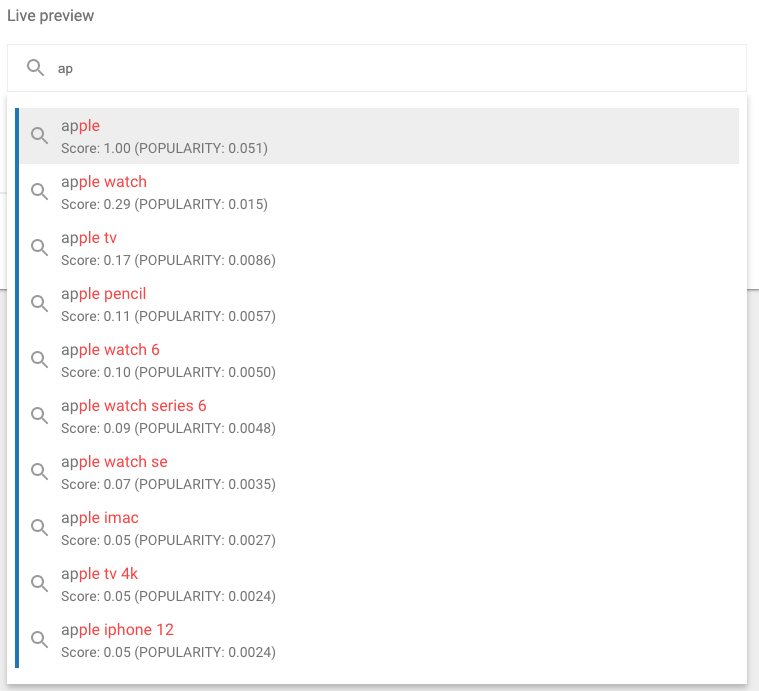
    • Most suggest functionalities cannot add short phrases, e.g. “ap,” to familiar brand names, like “apple,” to identify intent better.
    • Your current search tool is not performing at its potential.

    How can SearchHub help? The solution!

    The foundation of our approach lies in collecting the right data within a customer search journey. SearchHub then uses its AI framework to cluster search terms and autonomously choose the most valuable term. Then, once enough data has been gathered to make a proper decision, pick a MasterQuery for relevant clusters. In this way, we ensure your search understands your audience.

    SmartSuggest following initial learning phase.

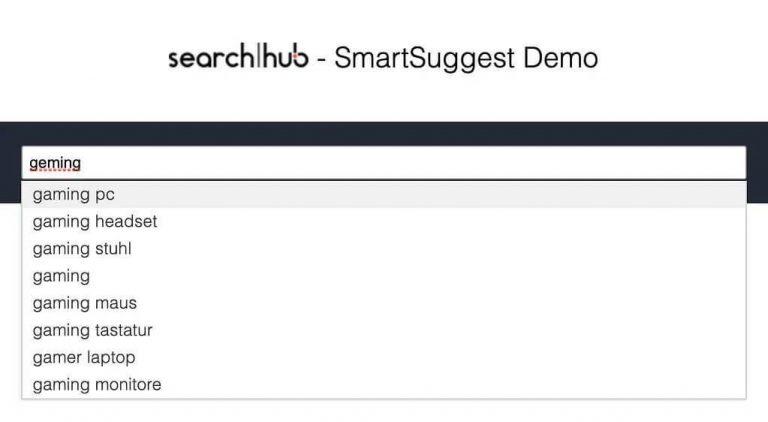
    Suggestions with spell correction and trend sorting

    SearchHub SmartSuggest runs in combination with whatever site-search technology our customers have in place. To preface, we’re not replacing what our clients have; we make it more clever. For example: whether you already use an open-source search framework (e.g., Elasticsearch, SolR, or OCSS) or still trust in your proprietary search vendor solution. SmartSuggest sits in front of your site-search and makes sure it understands your audience.

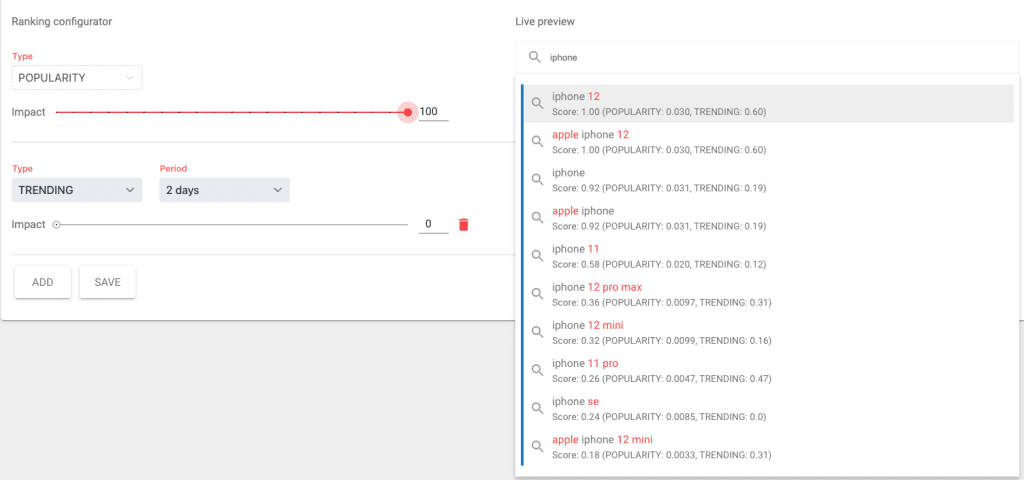
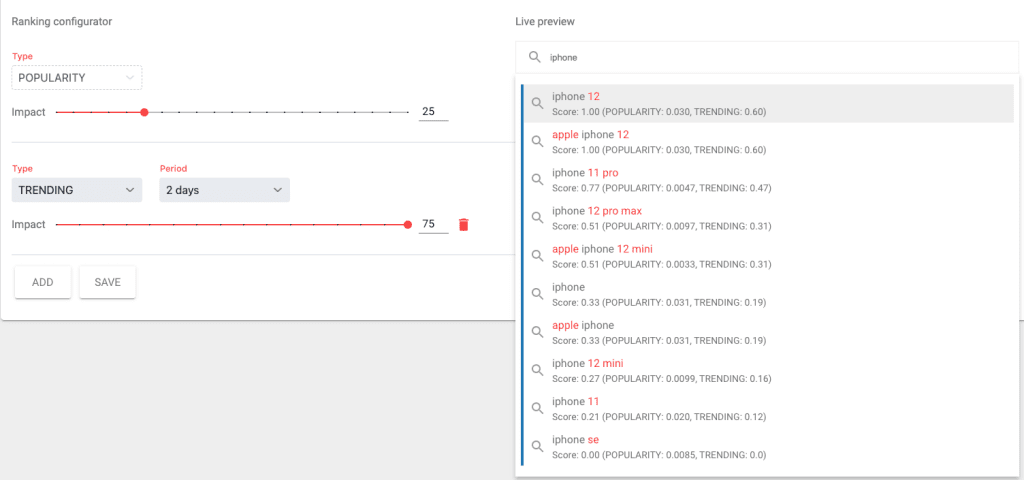
    Going a step further: by adding our SearchInsights module (specially designed for eCommerce site-search optimization) to the mix, you will be able to influence your SmartSuggest rankings according to keyword trends and/or conversion rates.

    👍Without trend influence (out of the box):

    👌With trend influence (using SearchInsights):

    This data-driven philosophy is so imperative to a good customer experience that we invented a findability score. Findability represents a weighted ratio between positive and negative user signals for a given Search Term. What does this mean? We consider things like exits, bounces, no-clicks, and long search paths to be negative signals. On the other hand, positive signals are things like clicks, rate of clicks on the first page of results, carts, and buys. A bonus: on top of our best-practice KPIs, you have the flexibility to define your own signals.

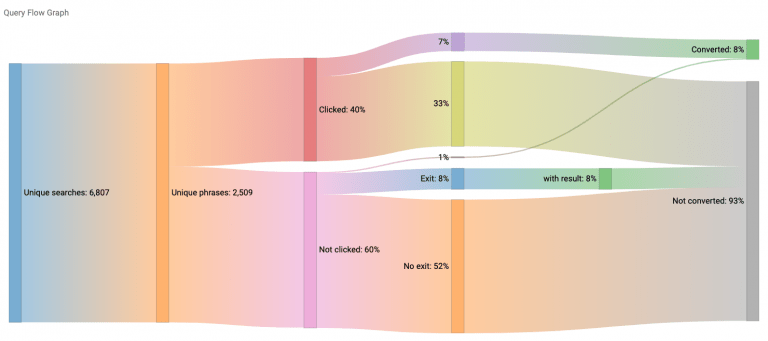
    Query-Flow Graph (SearchInsights Module):

    SearchInsights Query Flow Graph

    Last but not least: SmartSuggest keeps track of the search redirect and merchandising landing pages your team maintains. Detecting your merchandising & personalization rules means we always direct your visitors to the appropriate curated landing page.

    Should I replace my existing Auto-Complete / Suggest and UI?

    No, absolutely not. SmartSuggest works in concert with your current search tech stack. One button in the SearchHub UI is all you have to click to fire up your SmartSuggest service. This tech sits on the same data-driven foundation as our MasterQuery picking technology.

    Click here to skip our customer case and call us directly to find out more!

    Customer who combined technologies

    Have a look at STEG Electronics for a masterfully executed example. I’ll walk you through some details here.

    STEG already had an elasticsearch stack in place when we introduced Malte Polzin (CEO at STEG Electronics AG ) and his team to SearchHub. However, the prospect of having to implement the complete logic necessary to build a state-of-the-art suggest experience quickly led to the STEG team opting for a hybrid solution. It was clear that combining the data-driven knowledge base of SearchHub with their previously implemented suggest UI would be an innovative and efficient approach. Following a brief search-data-collection-period to gather all relevant search KPIs SmartSuggest was live.

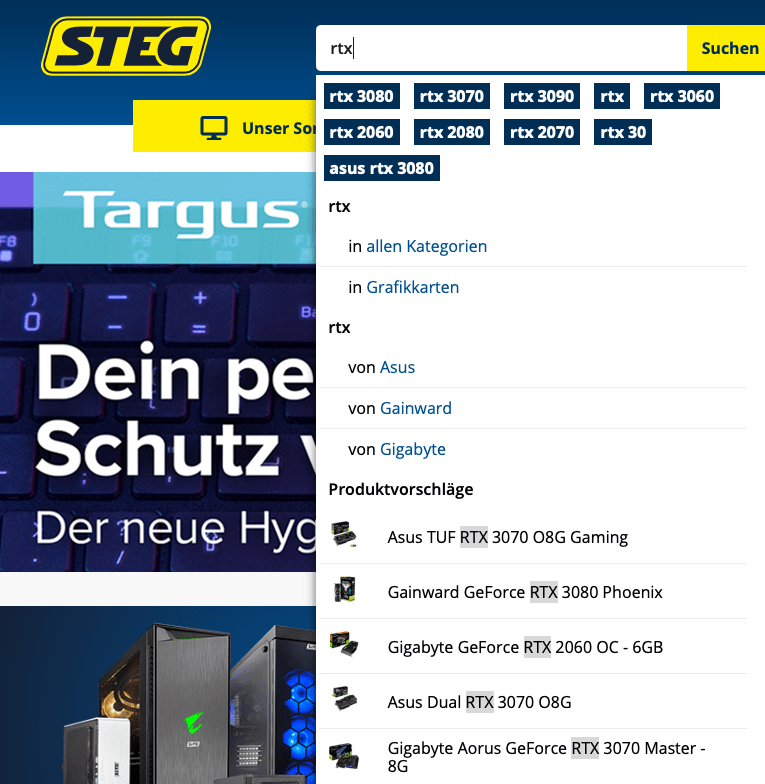
    STEG – initial SmartSuggest trend sorting

    “SearchHub gives us the flexibility to develop our unique eCommerce search solution based on Elasticsearch with a data-driven approach. The search experience we deliver to our clients is essential for us, and SearchHub supports us with unique expertise in this area. ” Malte Polzin, CEO STEG Electronics AG.

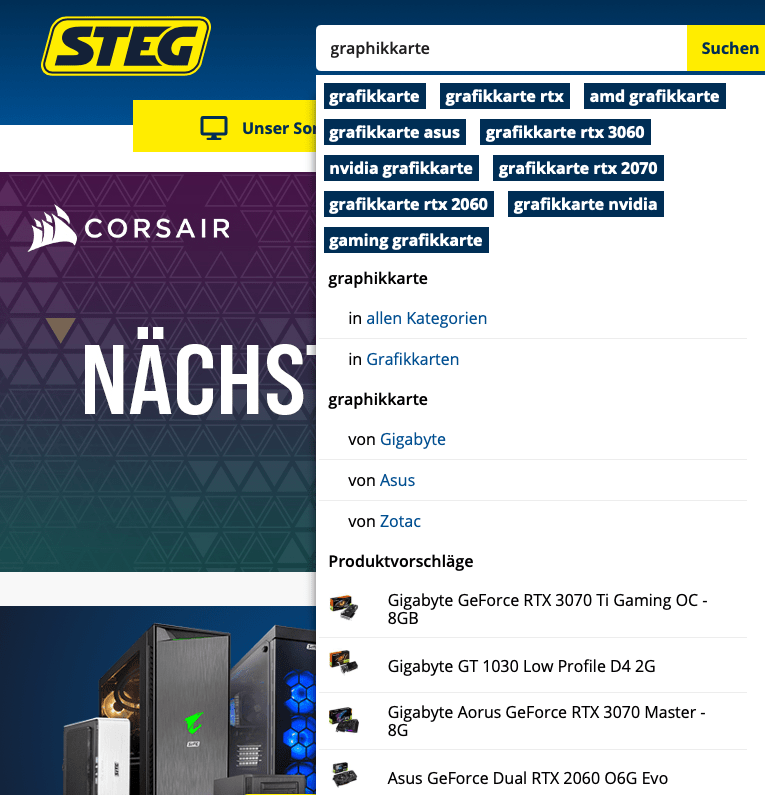
    STEG – SmartSuggest Trends even on Typos

    Typos and misspellings are handled autonomously by the SearchHub knowledge base. As a result, expensive, time-consuming algorithm operations are not necessary.

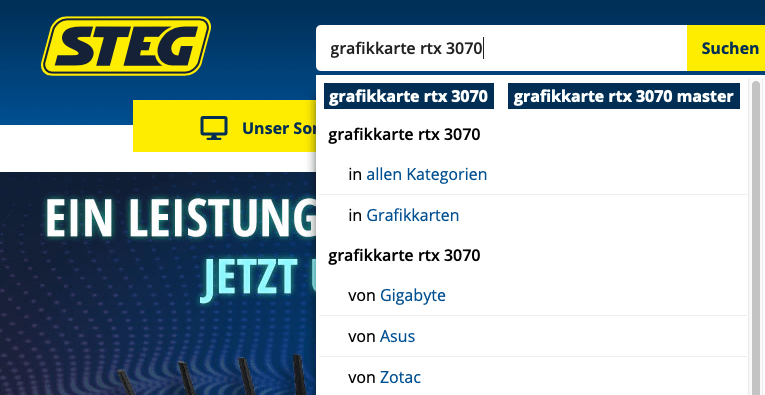
    Using SmartQuery suggestions allows STEG visitors to browse a list of dynamically-ranked keyword suggestions. The unique way in which the customer interacts with the list of keywords is quite clever. SearchHub’s SmartSuggest displays suggestions based on what’s trending or most valuable at the moment. This data-driven result sorting opens the door facilitates a remarkable user experience! Most notably, mobile device navigation is more usable. Customers select relevant criteria (attributes, tags, variables, etc.) right from SmartSuggest. This is an ingenious answer to the problem of how to handle facetted search on a mobile device. The customer narrows their search to precisely what they’re looking for, all before clicking on the actual “search” button. As a result, customers find what they’re looking for more quickly.

    On top of that, STEG saves the cost of unnecessarily querying their site-search engine for terms already known to be of high value.

    STEG Filters on Trends

    How do I benefit from SearchHub and make auto-complete data-driven?

    All you have to do is add your search tracking data (e.g., Google Analytics) to SearchHub or include our SearchCollector in your Tag Manager. Then, within a mere matter of days, depending on the size of your online business, we provide you with SmartSuggest functionality ready to use as a stand-alone or hybrid solution.


    What else do you get?

    • Maintain SmartSuggest within your SearchHub UI. Find out more here.
    • Add multiple Suggest labels to keyword clusters.
    • Manipulate and test your SmartSuggest ranking strategy with a live preview.
    • Merchandise SmartSuggest with inspirational redirect campaigns.

    What does your tech team need to know?

    SmartSuggest uses enriched keywords from the searchhub clusters database to generate a sophisticated suggest functionality. Designed on Apache Lucene to provide fast, weighted query suggestions. This particular style of deployment is part of the “Open Commerce Search Stack.” If chosen for your implementation, this module automatically connects the searchhub API retrieving the necessary search KPIs and returning detailed analysis data. Combined with performance figures about the module and its usage, you get a turnkey solution to optimize any site search from top to bottom.

    We recommend referencing our sample user story to help get you started with SmartSuggest in your system. Additionally, you can reference our SmartSuggest integration material here.

    We are happy to provide a demo environment and support you with your e-commerce search strategy, any time!

  • E-Commerce Site Search Overhaul – Super “selection” year 2021?

    E-Commerce Site Search Overhaul – Super “selection” year 2021?

    It’s not just politics that will be exciting this year. Changes are also on the horizon for e-commerce. The evaluation of an optimal e-commerce site search overhaul – make or buy a solution is quickly becoming a TOP trend in 2021.

    But how thorough to prepare an e-commerce search solution overhaul?
    Increasing the economic performance (e.g., CTR, CR) and improving the user experience (e.g., faster loading times, discovery features, and content integration.) Both are issues that undoubtedly concern all e-commerce retailers and will need to be dealt with to prevail against the competition.
    Reducing the manual effort required to maintain and control on-site search is an essential task in this regard.
    Beyond that, however, some other important questions need to be answered in advance within the organization.
    The following is a summary of the most critical points.

    E-Commerce Search Overhaul — Make or Buy?

    Algorithmic:

    How good is the search relevance model in full-text search, semantic correlations, long-tail keywords, languages?

    Discovery Features:

    How well are topics like complex price & availability dependencies, as well as guided selling and recommendations covered?

    Content Integration:

    What opportunities exist in terms of the controllable blending of products and promotional content?

    Merchandising Features & Analytics:

    How well can different sales-promoting strategies (including ranking) be combined with business KPIs and evaluated?

    Customization:

    How easily are individual requirements implemented?

    Intellectual Property:

    How can it be ensured that contributed domain knowledge and other forms of intellectual property remain in house?

    Deployment Model & Architecture:

    How flexible are the deployment model and system architecture?

    Integration & Ease of Use:

    How apt is the system integration, use, and operation?

    Which solution is the right one? Whether a commercial solution (such as Algolia, Attraqt, FACT-Finder, Findologic) or an open-source framework (such as OCSS https://blog.searchhub.io/introducing-open-commerce-search-stack-ocss) — the decision must be well-prepared.

    Conditions for the selection of an E-Com on-site search

    Before making an informed decision about selecting a new on-site solution/technology, it is vital to understand the implications, dependencies, and scope of such a decision.

    The deployment of such a solution quite often influences future business functions and strategic decisions without this being directly apparent in advance. Therefore, I examine the three most important influencing factors in more detail below.

    The Influence on corporate strategy:

    The core functions responsible for the broader business strategy’s economic success are a natural product of the medium- to long-term corporate strategy.

    The answers to the following questions about corporate strategy are particularly relevant when preparing for a vendor selection:

    1. Is a marketplace game plan a part of the corporate strategy in the next 2-5 years?
    2. To what extent do diversified local prices and corresponding availability need to be mapped via the on-site search solution?
    3. How will you divide your focus across customer channels in the mid-term? How will the ratios look?
    4. Which unique selling points/functionalities provide an anchor for your corporate strategy? Content leadership, expansion of digital advisor functionalities.
    5. What are midterm geographic growth markets already known?
    6. Is strategic ownership of core technological competencies and technologies part of the corporate strategy?
    7. Are there strategic requirements in terms of technological infrastructure (on-premise, private cloud, open cloud)?
    8. How large is the internal team (professional and technical) available to operate the on-site search?

    Influence of the IT architecture

    On-site search has to support many core functionalities of a digital enterprise. E-Commerce Search consumes, processes, or makes available for further processing, various data streams. As a result, an agile integration into existing IT-enterprise architecture is elementary for success.

    Suppose there is no acknowledgment of these foundational provisions. In that case, marred by lengthy, risky, and costly follow-up projects, subsequent adjustments, or even fundamental changes to the system landscape are often DOA (Dead on Arrival).

    In terms of the IT-organization, the answers to the following questions are particularly relevant when preparing a vendor selection:

    1. Which source and target systems integrations with on-site search currently exist, and which will be considered within the midterm?
    2. What are the data-security requirements? How often does this data need to be updated?
    3. Are there defined requirements concerning service-level agreements?
    4. Are there defined requirements in terms of deployment and infrastructure?
    5. Should the on-site search system-integration reside exclusively at the data level (headless architecture), or are rendering functionalities must-have requirements?
    6. From a technical perspective, should the on-site search system also be used as a product API?
    7. Are there complementary functionalities? For example, recommendation engines, personalization, or guided selling systems that need to be functionally linked or even combined with on-site search?

    Influence of operational resources and organization

    On-Site Search requires constant maintenance and must react to internal and external factors agily. For this reason, the selection, implementation, and operation of an on-site search is always only part of the solution. On the one hand, the system must be continuously managed and maintained by data-driven external systems (e.g., SearchHub.io) and operational staff with the appropriate domain knowledge.

    For the planning of operational resources and team organization, the following questions are essential for the professional selection of an on-site search solution:

    1. Does a dedicated team of employees already exist to maintain the on-site search manually? If so, how many?
    2. Does the team have developers, testers, and analysts? If not, is there a plan to expand the team’s skill set in these areas?
    3. Is the On-Site Search Team organized as a vertical business function in itself? I.e., does the team have all the necessary resources and skills to develop the On-Site Search business function on its own?

    Conclusion – E-Commerce Site Search Overhaul:

    Strategic internal deliberations significantly influence the evaluation of a new on-site search solution (make or buy). Answering these questions reveals their far-reaching and strategic nature. Naturally, thorough preparation will take time, and all necessary stakeholders will need to arrive at a consensus about the objective. This process leads to greater clarity regarding the next steps. Even if that means the best approach may be to keep the current, well-integrated platform and instead work on mitigating its weaknesses.

    There’s More than One Way to Skin a Cat

    There are often several ways to fix an on-site search-related deficiency. Resorting to blind action for the hell of it should never be one of them. Regardless of the euphoric high associated with onboarding a new complex piece of kit, if you haven’t done your homework, you’ll inevitably be trading fruit-flies for maggots. Like hoping to exchange your partner for a younger, less judgmental model, if you haven’t come to grips with your own shortcomings, you’re damned to take them with you to the next relationship.

    Know When to Hold ‘em, Know When to Fold ‘em

    I get it. Every so often, there’s nothing left to salvage. It’s best to cut ties and move on. However, between you and me, there are massive benefits in using software like searchHub to boost an existing system quickly. Furthermore, setting up searchHub affords more forward flexibility. This kind of software runs independently of any search solution. Meaning, you can use the logic you built with us and take it to any other search provider you migrate to in the future.

    • Best-case scenario: you turn your current solution into a searchandizing powerhouse.
    • Worst-case scenario: you now clearly understand what type of e-commerce search solution your business requires. And because your search-engine logic is not married to your on-site search, you’re able to migrate to a new solution with next to zero downtime.


    searchHub.io offers data-driven support and helps optimize existing search applications without making a corresponding system change.

  • Farewell 2020 – What’s Next in 2021?

    Farewell 2020 – What’s Next in 2021?

    Farewell to 2020! As exciting as it was game-changing, this year too now draws to an end. Like many of us – we at CXP searchHub.io had to adjust to the extraordinary situation. More than one vacation, to faraway lands, boasting paradisiacal beaches, had to be postponed. We found local alternatives instead. Gardens were tended to, apartments and homes painted, or, simply more time spent with family than usual. So what’s next in 2021?

    To be true, this Corona Year has galvanized the vocational day-to-day with the historically private family life more than ever. However, what took some getting used to the beginning of March, has revealed new and exciting possibilities.

    Nevertheless, the sun is slowly rising on the horizon.

    Notable Achievements in This Corona Year 2020

    In addition to revenue growth, customer acquisition, and technology development, it’s also important for an E-Commerce Start-Up to attend to remedial tasks like cleaning out the basement; minding the costs; and time for investing in each other. That goes for both inward and outward relationship building.

    This was an impressively, successful year for CXP SearchHub. And I’m quite proud of that. Thanks to our team, our customers, and partners.

    My Personal Goal Accomplished in 2020

    Every year my long-time friends and I meet and hike for a week. This year, due to the Corona situation, we stayed in our local area and walked from Freiburg to Lake Constance. A wild and fun hike for almost 180 km. And we never once got lost. In fact, the only thing I lost was a few kilos. 🙂

    180 km hike with my best mates.

    SearchHub Software Expansion

    We reached our goals alright. Yeah, we clearly surpassed them. As an E-Commerce SaaS (Software as a Service) provider, our most decisive KPI (key performance indicator) is ARR (annual recurring revenue). With growth over 50%, we were able to confirm our business focus set, last year, at the end of 2019. As a result, searchHub.io has played a central role in our business strategy for 2020 and will be expanded upon in the coming year 2021.

    Additionally, as part of searchHub, we also launched our searchInsights tool. This is an overview of all relevant Search KPIs with a first of its kind Findability Score (find out more about this KPI and why it’s important for sustainable search optimization in our blog post here) for daily optimizations and reporting.

    New Business Expansion

    I’m overjoyed about the many customers who chose to place their trust in our business this year. They play a definitive role in the ongoing success of CXP SearchHub.io. Alongside new customers like Cyberport.de, Steg-Electronics.ch, and INTERSPORT.de, our journey continued with ALL our long-standing customers as well. In addition to all the growth, it’s these of which I’m especially proud. Our long-term, trusted customer relationships are the fuel behind the motivation, innovation, and continued development at CXP. Thank you, for the valuable feedback and insightful ideas.

    New Customers in Their Words

    searchHub.io enables us to develop our own eCommerce search solution based on Elasticsearch with a data-driven approach. The search experience we deliver to our clients is important for us, and searchHub supports us with their unique expertise in this area.

    Malte Polzin, CEO – STEG Electronics AG

    In CXP, we have not only found a technological vendor, but we also gained a partner who actively participates in our daily on-site search optimizations with an incredible depth of experience. The speed at which we connected to searchHub was a sprint, not a marathon, going from 0 to 100 in nothing flat. A short time later, increased revenue was proof of success.

    Carsten Schmitz, Chief Digital Officer – INTERSPORT Deutschland e.G.

    With CXP searchHub.io, we can guide our customers even more effectively into our product assortment. The intelligent clustering of long-tail search traffic enables us to control our search solution even better. The maintenance effort for search merchandising campaigns has been reduced, and search analytics are even more transparent. With searchHub, we have been able to increase the value per session ad-hoc by more than 20%

    Dominik Brackmann, Managing Director – Ecommerce at POCO.de

    What’s in Development

    With searchHub.io, we were able to release new features every month. In addition to the myriad technological developments within our Clustering-Algorithm, and new integrations (e.g., for Spryker), we have also added redirects, mapping-statistics, search-insights, as well as, an Online-Chat and On-Boarding Videos, to both improve usability and make ramping up with our software easier.

    In 2020 SmartSuggest became part of our standard offering

    Jonathan Ross, joined our CXP Team this last summer

    Along with the continued development of our OCSS – “Open Commerce Search Stack” – a special highlight has to be our SmartSuggest. This new technology runs on the same SearchHub knowledge base and is available to every customer as part of our standard offering.

    CXP Family Business

    There isn’t just one highlight this year. In sum, the entire TEAM is the highlight. But I know you won’t let me off that easy, so…

    This year presented us, once again, with the opportunity to take our place at the MICES 2020 – in connection with the Berlin BUZZWORDS AND HAYSTACK! Here’s a link to the lecture from our Andreas Wagner on the topic “Diversification of Search”.

    This year also heralded the arrival of Jonathan Ross, whom we gladly welcomed to our team. Jon will continue supporting us in 2021 with his experience of many years.

    Covid wasn’t gettin’ us down!

    Team Event was moved to September

    Gabriel Bauer became our youngest shareholder

    A new Shareholder was born. Yet another member of our staff became part-owner of the business. A core tenant of our company philosophy is built on the premise of employee ownership. Since 2014, long-standing employees participate in the success of CXP. This year, we were happy to welcome Gabriel Bauer as the newest shareholder. Discovering our knack for canoeing. It’s on our list for next year. Team Event was moved to September.

    A further highlight was most definitively our global Team-Meeting. Time to get to know knew colleagues and old friends. COVID-19 wasn’t gettin’ us down!

    Due to Corona, we were forced to reschedule to September, and find a Team-Meeting worthy event, while conforming to all necessary restrictions. What began as kind of a downer for the staff, quickly turned into a sunny, and athletic Team-Event, which strengthened our solidarity for one another. It goes without saying, that we will be repeating this type of event the next chance we get.

    What’s On the Horizon?

    First off, I hope that everyone makes it, healthily and comfortably into the new year, enjoying time together with their families. Once the lockdown is over, we’ll be starting the year 2021 with a few well-known new customers – more about this later on LinkedIn and here on our blog, just as soon as we can officially say more.

    Notwithstanding Brexit, or maybe even as a result of, we are taking our first dip across the pond to set foot on the island this coming year. Together with our new UK consultants, UK customers will soon be able to take advantage of searchHub.

    In that vein: our partner ecosystem continues to expand. We’re excited to tell you more about stronger relationships with leading E-Commerce agencies, as well as, 3rd Party Systems. With the development of necessary system interfaces, we are building strong synergies.

    And… what kind of SaaS company would we be without technological innovations? We are continuing development on things like “Kihon” – a relevant milestone in our Clustering-Algorithmic or “Structured Queries”. Truly, search has never been more simple.

    Stay-Tuned – 2021 will be suspenseful.

    Sunsets, like these, are beautiful endings

    Last but not least – I’m still hoping to see such a sunset in the year to come 🙂

    Merry Christmas, Happy Holidays, and see you soon. Stay positive – test negative 🙏

    Sincerely, Mathias & Team CXP searchHub